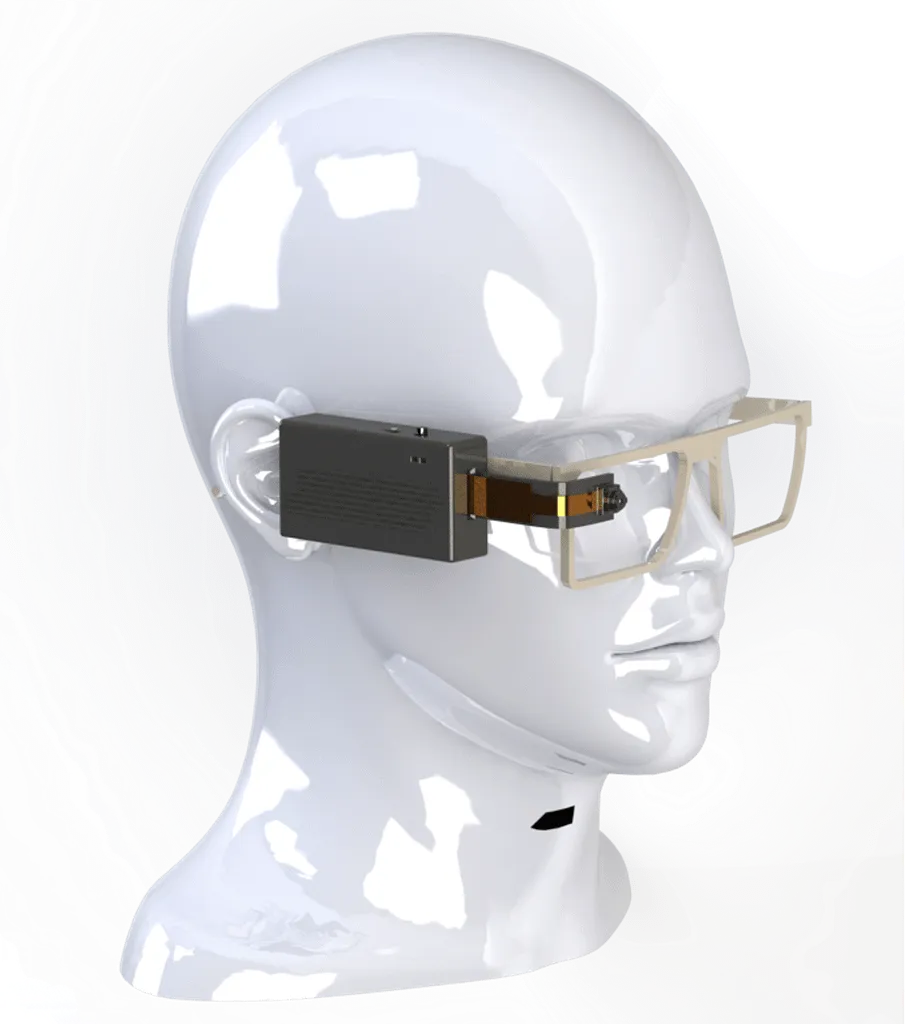
Smart Glasses
Engineering Real-Time Intelligence with Facial Recognition Smart Glasses
Engineering Real-Time Intelligence with Facial Recognition Smart Glasses
Case Study: Smart Glasses
Company: Smart Glasses
Location: Beirut, Lebanon
Website: http://scalabledesings.co.uk
We partnered with a security-focused client to develop a sophisticated wearable intelligence system. Their vision was to create military-grade smart glasses capable of live-streaming facial data from the field, performing real-time analysis, and providing discreet audio feedback to personnel via a bone conductor.
The primary challenge was to engineer a wearable device that was not only small, lightweight, and power-efficient for field use but also incredibly fast. The entire process. from capturing a person's face to delivering identifying audio feedback to the user. needed to be completed in under 3 seconds to be effective in real-world tactical situations.
The solution had to:
Our development process was iterative, adapting to evolving client requirements to build the most effective solution possible.
The first prototype was built using a Raspberry Pi Zero and Bluetooth for communication with a mobile app. A key challenge was the speed of the data round trip. To solve this, we meticulously optimized the data packet, compressing the image to be as small as possible while still retaining the necessary detail for the facial recognition algorithm to succeed. We also solved complex data transmission issues, such as managing byte order (Big vs. Small Endian), to ensure data integrity. This initial approach successfully achieved a respectable 2-second round trip for a single image capture.
As the project evolved, the client requested a major enhancement: a move from single-frame captures to continuous live video streaming. Our analysis showed that Bluetooth's data throughput was insufficient for this demanding task.
In close collaboration with the client, we pivoted our strategy to use Wi-Fi Direct. This technology offered significantly higher bandwidth while still allowing the device to connect directly to a mobile phone without a traditional Wi-Fi network. We then integrated our client-side code directly into their existing mobile application, creating a seamless bridge that handled communication between the glasses and the backend server.
We successfully delivered a high-performance wearable intelligence system that met all the client's demanding operational requirements. The final product, leveraging Wi-Fi Direct, provides a stable, high-throughput connection for live video streaming.
The entire capture-analysis-feedback loop operates in under 3 seconds on a standard 4G network, providing personnel with the critical, real-time information they need to make decisions in the field. The project demonstrates our ability to solve complex hardware and software integration challenges and adapt to evolving project scopes to deliver a superior final product.